Back to School Alphabet Handwriting: A Practical Tool for Early Learning
There is something about the start of a new school year that makes even the most organized parent pause and take stock. The backpacks, the lunch boxes, the fresh set of crayons. And then there is the handwriting. If you have ever watched a preschooler or kindergartner grip a pencil for the first time, you know it is equal parts determination and chaos. That is where Back to School Alphabet Handwriting worksheets come into the picture—not as a rigid curriculum, but as a simple, repeatable resource that fits into real life. Whether you are a parent wrangling nap schedules, a teacher managing a classroom of twenty, or a caregiver looking for quiet activities that actually build skills, these A-Z PDF pages offer something surprisingly versatile.
Let's walk through what this product actually looks like in practice, and why so many adults turn to it when the back-to-school season rolls around.
What These Worksheets Bring to the Table
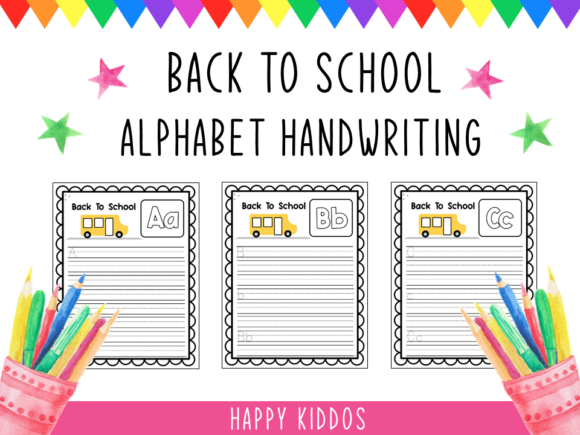
The Back to School Alphabet Handwriting set includes twenty-six pages, one for each letter from A to Z, in a single PDF file. Each page is designed for preschool and kindergarten level work. No fancy setup, no complicated instructions. You download, print, and hand them over. The digital format means you can print as many copies as you need, which matters when you have one child who wants to practice the letter S seventeen times in a row. Or when you realize halfway through September that your stack of worksheets is disappearing faster than a snack drawer.
Because it is a digital product, there is no physical item to ship. No waiting, no backorders, no lost packages. You get the file, you use it on your schedule. For anyone who has ever tried to wrangle a toddler into a car seat to drive to a store, that convenience alone can be a lifesaver.
The Morning Routine That Actually Works
Think about the first few weeks of school. Everyone is adjusting to earlier wake-ups, new routines, and the sudden need to be ready by a certain time. For some families, a quick handwriting page after breakfast becomes a calm bridge between cereal and shoes. The child sits at the kitchen table with a pencil while the parent loads the dishwasher or packs a lunch. It is not a lesson. It is just a few minutes of focused tracing and writing that settles the mind before the bus arrives.
One parent I know keeps a small folder of these sheets near the breakfast nook. Her son grabs one while his oatmeal cools. By the time he finishes the letter B or M, he is more awake, more centered, and ready for the day. That small habit, repeated over weeks, builds both handwriting skill and a gentle morning rhythm.
Classroom Centers and Quiet Time
Teachers often face the challenge of keeping a room full of young children engaged while also addressing individual skill levels. The Back to School Alphabet Handwriting pages work well in a writing center or as part of a morning arrival activity. A child who is still working on letter formation can practice without feeling pressured, while another child who is more advanced might use the same page to write simple words that start with that letter.
There is also the reality of classroom management. When one group is finishing a project and another group is waiting, a handwriting sheet can fill that gap without disrupting the flow. It is quiet, independent, and productive. Teachers appreciate that it requires no explanation or setup each time.
After School Wind Down
School is exhausting for young children. The constant listening, following directions, and navigating social dynamics leaves them drained. Handwriting can actually serve as a calming activity after school. Unlike screen time, which can overstimulate, tracing letters gives the hands and brain something repetitive and soothing to do. A child might sit at the kitchen table with a worksheet and a favorite pencil while a parent asks about their day. The conversation flows more naturally when the hands are busy.
I have seen siblings do these pages side by side, one practicing letters while the other draws pictures on the back. It is not formal homework. It is just a low-pressure way to keep the school momentum going without turning home into a classroom.
Homeschooling Families and Flexible Learning
Homeschooling parents often juggle multiple ages and subjects in one day. The Back to School Alphabet Handwriting set fits well into a literacy block or as independent work while the parent works with an older sibling. Because the pages progress through the alphabet, they can be used in order or pulled out to match a letter the child is learning about in a broader unit. If a child is fascinated by dinosaurs, for example, the D page becomes part of that theme. If the week is about apples, the A page appears naturally.
The digital format also means you can print only the letters you need at any given time. No wasted paper, no workbooks with half the pages untouched.
Daycare Centers and Early Childhood Programs
In daycare settings, children often arrive at different developmental stages. Some three-year-olds are ready to trace letters. Others are still building fine motor skills through play. The worksheets can be offered as one option among many. A caregiver might place a few pages on a low table near a basket of pencils and let children choose whether to participate. No pressure, just invitation. Over time, children gravitate toward the pages as they become more comfortable with writing tools.
Grandparents and Extended Family
It is not just parents and teachers who end up using these resources. Grandparents often look for meaningful activities to do with grandchildren during visits or sleepovers. A handwriting worksheet is something a grandparent can sit down and do alongside a child. It sparks conversation about letters, names, and words. It also gives the grandparent a window into what the child is learning at school. One grandmother told me she keeps a small binder of printed sheets at her house so her grandson can do school
when he visits. That binder has become a beloved part of their routine.
Practical Observations from Real Use
Handwriting practice for young children is not about perfection. It is about exposure and repetition. The Back to School Alphabet Handwriting pages provide a consistent format, which children find reassuring. They know what to expect: a large letter to trace, space to try it on their own, and often a simple image or word that reinforces the sound. That predictability builds confidence.
One thing to keep in mind is that every child develops fine motor control at a different pace. Some will trace beautifully at age three. Others will not show interest until five or later. The worksheets are a tool, not a test. If a child is frustrated, put the page away and try again another day. The goal is familiarity, not force.
Another observation from parents and teachers alike is that young children often want to rush through tracing. They speed through the letter, then look for the next page. That is fine. Speed is not the point at this stage. The repetition across multiple days and weeks is what builds the muscle memory. Using one letter per day, or even one letter per week, allows the child to absorb the shape and stroke order without feeling overwhelmed.
Considerations Before You Print
Because this is a digital product, you have full control over how you use it. That is a strength, but it also means you need to think about a few practical details beforehand. Printing at home requires a working printer and paper. If you do not have easy access to printing, you might use a local print shop or library. The PDF format works on any device, so you can also display the page on a tablet and have the child trace with a finger or stylus if that suits your situation better.
Some children respond better to color. If you have a color printer, the pages come alive more. If you only have black and white, the worksheets still work perfectly. The content is not dependent on color. You can also slide a printed page into a plastic sheet protector and let the child use a dry erase marker for repeated practice. That approach is especially popular in classrooms where multiple children share materials.
It is also worth noting that these worksheets focus specifically on uppercase or lowercase letter formation, depending on the set you choose. Check the product listing to see which version aligns with what your child or student is learning at school. Consistency matters. If the school teaches lowercase first, you want the lowercase set.
Strengths and Honest Limitations
The biggest strength of the Back to School Alphabet Handwriting set is its simplicity. There are no distractions, no games, no gimmicks. Just clear letters and space to practice. That makes it easy to integrate into any routine, whether you have five minutes or twenty. It also makes it suitable for a wide age range, from early preschool through kindergarten, and even for older children who need extra handwriting support.
Another strength is the digital format. You buy once and print forever. For teachers managing a classroom budget, that is a meaningful advantage. For parents with multiple children, you can reuse the same file year after year.
On the flip side, if you are looking for a full handwriting curriculum with lesson plans, assessments, and progress tracking, this is not that. These worksheets are a supplement, a practice tool, a quiet activity. They work best when paired with other forms of literacy instruction and hands-on learning. Also, because they are paper based, they require adult involvement to ensure the child is forming letters correctly. A child can practice bad habits if left completely unsupervised. Quick check-ins make a big difference.
Another limitation is that some children simply are not ready for formal handwriting at the preschool age. If a child struggles to hold a pencil or shows no interest, pushing worksheets is counterproductive. In those cases, fine motor play with clay, scissors, and building toys is a better foundation. The worksheets will still be there when the child is ready.
Making the Most of the Resource
The most effective way to use Back to School Alphabet Handwriting pages is to treat them as part of a larger learning environment. Pair a worksheet with a hands-on activity like forming the same letter with playdough or finding objects around the house that start with that sound. This connects the abstract letter shape to real world meaning. For example, after tracing the letter C, a child might go find a cup, a car, and a cat toy. That kind of active learning sticks.
Another idea is to create a simple alphabet book by stapling completed pages together. By the end of the school year, the child has a personal book of letters they wrote themselves. That sense of ownership is powerful. Children flip through their own work with pride, and that pride motivates further practice.
For teachers, rotating the worksheets through a writing center over several weeks keeps the material fresh without introducing new instructions each time. Students learn the routine and can focus on the letter itself rather than figuring out what to do.
Who Will Find This Most Useful
This resource is especially helpful for adults who want something ready to go with minimal prep. If you are a parent who works full time and needs an activity that does not require cutting, laminating, or elaborate setup, this fits. If you are a teacher who needs a reliable option for independent practice while you work with small groups, this fits. If you are a caregiver who wants to support early literacy without stepping on the toes of a school curriculum, this fits.
The back to school season is busy for everyone. Having a simple, effective tool like the Back to School Alphabet Handwriting set means you are never scrambling for something productive to put in front of a young learner. It is not the fanciest resource on the market. But in the chaos of September, practical and reliable often matters more than flashy.
Whether you use it at the breakfast table, in a classroom corner, or during a visit to grandma's house, the value is in the repetition and the routine. That is how handwriting becomes natural. That is how letters become familiar. And that is how a child walks into school feeling ready to write.